
Course structure
Four modules, taken in sequence or on their own
Each module stands alone but is designed to be taken in order: format economics first, then compliance, then location, then menu and break-even. Every module includes video lessons and a downloadable spreadsheet template you keep after completion.

Module by module
What each module contains
Module 01
Food truck versus trailer versus market stall economics
This module opens with a plain description of the three formats and the questions worth asking about each: how long the vehicle or stall stays roadworthy, how permit and pitch fees differ, and how storage between shifts changes your weekly schedule. Lessons cover fuel and generator running cost, insurance categories relevant to mobile catering, and how depreciation differs between a converted trailer and a purpose-built truck.
The lesson sequence is short: five lessons, each ten to fifteen minutes, followed by a worked example using published cost ranges rather than a single recommended figure. You then use the attached spreadsheet to enter your own city's permit costs and compare formats side by side.
Includes: Format Comparison Spreadsheet (.xlsx)
 Module 02
Sanepid approval based on publicly available guidelines
This module walks through the sanitary approval sequence described in publicly available Sanepid guidance for mobile food points of sale: the HACCP documentation appropriate to a small mobile kitchen, water supply and grey water handling, staff sanitary-epidemiological books, and the notification process before first operation.
Rather than paraphrasing the guidance loosely, each lesson links to the relevant published source and explains, in plain language, what the requirement means in practice for someone operating from a vehicle rather than a fixed premises. A checklist spreadsheet tracks which documents you have gathered and which remain outstanding.
Includes: Sanepid Document Checklist (.xlsx)
 Module 03
Choosing locations by analysing foot traffic patterns
Location selection is treated as a data collection exercise rather than a guess. Lessons cover how to run a fifteen-minute pedestrian count across several dayparts, how to note nearby anchors such as office entrances, transit stops or existing market stalls, and how weather and local events shift demand on a given day.
You learn to log this information consistently across several candidate sites, then feed it into a scoring spreadsheet that produces a comparable number per location. The module also discusses how permit rules for a given square or street may restrict which spots are actually available to a mobile vendor, separate from how busy the spot appears.
Includes: Location Scoring Spreadsheet (.xlsx)
 Module 04
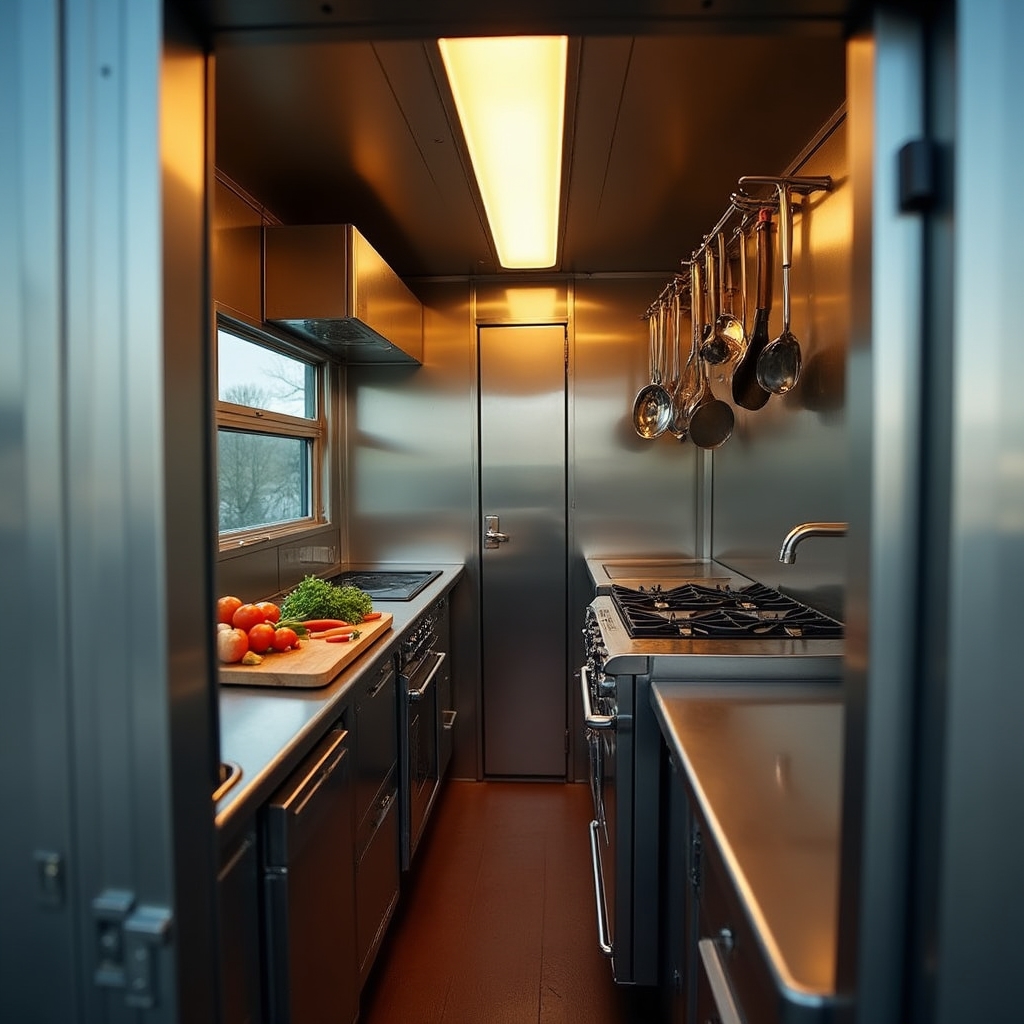
Building a menu from a three-metre kitchen, and daily break-even
This module starts by mapping the physical constraints of a typical three-metre galley: burner count, refrigeration volume, prep surface and where a single cook can stand without colliding with the point of sale. From there, lessons build a menu of four to seven items that share base ingredients, keep prep time predictable, and can be plated within a target service window per order.
The second half of the module addresses the specific challenge of a business that relocates daily: how to build a break-even formula that recalculates each morning based on that day's pitch fee, drive time and expected footfall, rather than relying on a single monthly figure that does not reflect how mobile costs actually behave.
Includes: Menu Costing Sheet and Daily Break-Even Calculator (.xlsx)
What you keep
Five downloadable spreadsheet templates
All templates are plain spreadsheet files with formulas already built in. You add your own numbers; nothing requires a subscription or additional software.
Format Comparison
Upfront cost, running cost and permit fees across truck, trailer and stall.
Sanepid Checklist
Document and inspection steps organised in the order Sanepid guidance presents them.
Location Scoring
Turns foot traffic logs from multiple candidate pitches into a comparable score.
Menu Costing
Ingredient cost, prep time and margin per item for a limited, shared-ingredient menu.
Daily Break-Even
Recalculates the number of orders needed to cover cost for each day's specific pitch.